

Probe – What Is It That I Wish?
What is it that I wish? What do I want? What do I feel I need? Every wish creates a potential line of intention. So what do I wish and do any of these wishes conflict with my greatest wish, which is to be, to remember myself? Once I truly see the need to be, to remember myself—out of that need—comes the wish. And that wish has to be renewed and renewed. And in making that wish, I admit then, that I ‘am not’ and wish ‘to be.’ That’s what’s essential.
The problem is that I don’t really admit that. I think ‘I am’ most of the time, in spite of what my self-observation has shown me—that I’m continually wandering, distracted, engaged in wishes for other things…embroiled. So I can’t wish, really, ‘to be’—until the wish is pure, that is, based on the reality that I ‘am not,’ that I wish ‘to be.’ Once that recognition imprints—irrevocably—then the question: what is it that thwarts my wish ‘to be.’ It can only be other wishes, ingrained habits, fears, desires. That’s my work, my personal work, which is different for everyone, though certain overall patterns apply to everyone.
I see that is my work at the moment—all the counter-wishes. And so I must wish ‘to be,’ over and over. Then to execute that wish, to not deposit it like a letter in a mailbox and hope it reaches its destination—but to execute the wish, that’s will. There’s consciousness of the wish, there’s the execution of the wish, there’s the realization of the wish—being. Consciousness, will, being. And then, having achieved that, to whatever degree, can it be maintained? Can the wish enlarge? Can it have duration?
Or is it another broken octave—‘do, re, mi;’ ‘do, re, mi’? In that gap, what is it that breaks the wish? I must work to see what that is. Otherwise, it’s just analytical and a dream, historical. In that very nano-second where the wish is broken, what took me, what robbed me, what did I give myself to—that’s intelligence. We need to know what that is and not judge ourselves because that’s going even deeper into the word-world, into history. It’s to come to this over and over and over again, seeing how long it can be extended. And the way to do this is to breathe, it is not just to have sensation of the body, but to breathe into the body in the act of executing the wish. That’s the link.
And, to guard the mind from errant thoughts, pay no attention to those that do enter, to keep myself focused on the body and focused on the task. It sounds like so many things to do but this is just breaking it up sequentially. It all happens together at once. In a sense, I’m not doing any of it. I’m just agreeing with the wish. For in truth, I don’t remember myself—I am remembered. That’s always a startling statement when you hear it. The idea that I’m doing it? I’m not doing it! I’m wishing, I’m agreeing, I’m admitting that it needs to be done. I’m vacating the premises of my little wishes, my history and so forth. I’m allowing something else, something higher to enter, and ‘to be.’ To be in knowingness, because what is vacated is really just the person.
It all happens with the wish, and the wish can’t come unless the wish is true—that I admit to myself the dire need ‘to be.’ 
—William Patrick Patterson
Sayings of Substance
Gurdjieff on Theosophy
There are two lines known in Europe, namely theosophy and so-called Western occultism, which have resulted from a mixture of the fundamental lines. Both lines bear in themselves grains of truth, but neither of them possesses full knowledge and therefore attempts to bring them to practical realization give only negative results.
A grain of truth in an unaltered form is sometimes found in pseudo-esoteric movements, in church religions, in occult and theosophical schools.
There are many things worse than ‘black magic.’ Such are various ‘occult’ and theosophical societies and groups. Not only have their teachers never been at a school but they have never even met anyone who has been near a school. Their work simply consists in aping.
People giving themselves up to various ‘woeful’ ideas in these spheres of quasi-human knowledge, which, in different epochs, bore different names, and which today are called ‘occultism,’ ‘theosophism,’ ‘spiritualism’…
In my opinion, my work and ideas greatly interested, from the very beginning, such people as were already in the highest degree ‘possessed’ of the before-mentioned ‘specific-psychosis’ and were accordingly known to those around them as being preoccupied with every kind of ‘nonsense’ otherwise known under such names as ‘occultism,’ ‘theosophism’…
Now continue to engender only all kinds of ‘pseudo-teachings’ there, like those existing there in recent times under the names of ‘Occultism,’ ‘Theosophy,’ ‘Spiritualism’…
Gurdjieff on His Teaching
The teaching whose theory is here being set out is completely self-supporting and independent of other lines and it has been completely unknown up to the present time.
My teaching is my own. It combines all the evidence of ancient truth that I collected in my travels with all the knowledge I have acquired through my own personal work.
He had said innumerable times, ‘When my teaching understood, will not be any more electric light.’
The arrogation and leveling of
Mr. Gurdjieff’s teaching of
The Fourth Way continues.
Gurdjieff was unequivocal.
Sources for Sayings of Substance are:
In Search of the Miraculous 286, 314, 227
The Herald of Coming Good 21–22, 26
All & Everything 249
Our Life with Mr. Gurdjieff 183
The Gurdjieff Years 117
Sport
& The Death of Brains
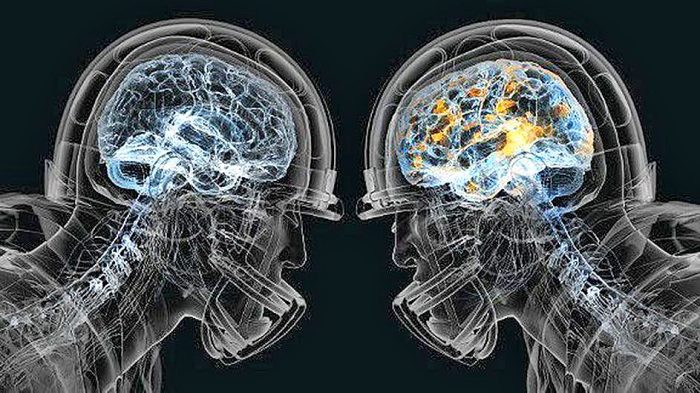
X-ray photo above: Of 111 football players in the NFL, from every position on the field — quarterbacks, running backs, linebackers, a place-kicker and a punter—10 were found to have chronic traumatic encephalopathy, the degenerative disease believed to be caused by repeated blows to the head.
Now let us talk about that particularly maleficent invention of the ancient Greeks, which is being actualized in practice at the present time by the beings of the contemporary community there, called England, and which invention they call ‘sport.’
For Gurdjieff, the steady capturing of everyone’s attention by this activity is potentially dangerous for several reasons. Not only has sport become a distraction used by power-possessors to manipulate the masses, it poses a threat to the physical health and well-being of people, even to the point, in some cases, of decreasing their life spans. For the aim of spiritual evolution, Gurdjieff gives us an even more urgent warning in the quote above, especially given the wide societal emphasis on sport and its inflation in the media: sport robs us of attention, vital to our potency to Work.
Where Is the Attention in Sport?
We are lived by internal or external influences of the moment. Our attention is continually being taken, identified—continually captured. At other times when there is strong interest, desire or a problem needs to be solved, we can experience a concentration or focusing of attention that is directed, or one-pointed. In both cases we are asleep to ourselves. That is, we have no sense of ourselves as beings in sensation of the whole of ourselves having three brains (mental, emotional, and instinctive/moving/sexual), each participating in the experiencing. Either we are entirely dispersed or driven by the desire of one of our brains impelling a mechanical one-pointedness.
Olga de Hartmann writes,
Mr. Gurdjieff told us very seriously that attention is absolutely indispensable for any work we wished to do with him. If we did not understand that, nothing could bring us to the aim for which we came to him. All of us there already felt that we were more than just a body. We knew that ‘something else’ was in us, and we wished to know: what is that? What have we to do with that? How can we call to it? How can we bring it out? How can we rely on it and not depend only on the body? All this was really a burning question for us, and Mr. Gurdjieff made it clear that if we didn’t study attention—not study in the ordinary way, but putting all our attention on developing that attention—we would arrive nowhere. …
Travel to Sacred Places
A Family’s Visit to Gurdjieff’s Grave & the Prieuré
This summer, our family’s travels began with several days in the environs around Paris, and visits to places Sacred within the Gurdjieff Work. The first stop was 6 rue des Colonels-Renard, the site of Mr. Gurdjieff’s Paris apartment, which stood as a beacon to consciousness as documented in Voices in The Dark. Referencing the indelible final page of “From the Author” in All & Everything, this site served as a potential portal to paradise and eternity in the midst of Hellish surroundings, and also offered a seminal influence on the future of the Work. Mr. Gurdjieff’s Sacred Rascooarno saw tutelage by those who carried the Sacred Teaching into the future, including Lord Pentland in our own lineage. Taking our children there to witness this monument to truth, was an important first stop on our journey.


We next traveled to Avon to see the Château du Prieuré. This was a test of endurance and will, as we first erroneously searched in the neighboring town of Fontainebleau. All inquiry into the location of the Prieuré led locals to guide us toward the Château de Fontainebleau, the once weekend palace of the kings of France. To further confuse matters, almost each block in the town had a building very close in appearance to the Prieuré, in size and architectural style (at least to our American eyes remembrance from photos). It took continued searching and inquiry to finally be directed toward Le Prieuré des Basses-Loges in Avon. For future pilgrims, you can accurately arrive there with these directions: 48° 25′ 11″ N, 2° 44′ 09″ E.
Arriving, there was a palpable sense of anticipation and an exhilaration after the long search. We parked and stepped onto the property, the grounds of which are now a park-like setting for the adjacent medical clinic. It was beautiful and serene, and the promenade under a set of short trees provided shade against the hot summer sun. To the right end of the park was a tall hedge, and over the top could be seen the familiar roofline of the Prieuré. Knowing that we were looking at the place where Gurdjieff had walked and taught produced a feeling that was accompanied by a strong sensation of energy. Here, the Institute for the Harmonious Development of Man had its existence and stood as a monument to Being, Conscience, Consciousness.


Driving away from the Prieuré, we considered departing Avon, as a long drive to the South of France lay ahead. Amy resolved the question of whether to first visit the Avon cemetery, or whether to save that for a future visit by asserting, “We are here now!” Arriving at the entrance to the cemetery, we drove through the gate and, finally gaining the internet access that had escaped us in our search for the Prieuré, were directed to turn left on the first drive. Stepping out of the car, there was the simultaneous impression of the immensity of this locus on God’s Earth, and a realization that the grave was in need of the attention periodically necessary for its upkeep. Initially, there was pulling by hand some tall weeds that had grown over the bed of grass. It was evident, though, that more time would be needed to properly tend to this most sacred of sites. The trip to Gascony would have to wait; the prepaid hotel reservation would necessarily be forfeited. The words from earlier echoing: “We are here…now!” After conversing with the local attendant, we traveled in search of a store where we could purchase gardening tools. Finding only ordinary shears, we returned and spent the afternoon trimming, weeding, watering the flowers still bordering the grave, and otherwise maintaining the site where the planetary body of Mr. Gurdjieff was laid to rest, alongside Madame Ostrowska, Gurdjieff’s mother, and his brother, Dimitri.
The impression on the entire family of Working — the children patiently assisting with returning the lawn back to a manageable height using ordinary scissors, pulling a seemingly infinite array of weeds along the border, and watering the patches of lawn that had succumbed to the summer heat —magnified by the energetic residue of being. The children seemed to understand the importance of the work, and rather than complaining of the heat or the time, used the tools we had to continue the process.

It was all potent food; resisting the urge to futurize and to imagine what else could be done to beautify the grave; staying with the vibration of Working in the moment, in presence; the permeating serenity of the surroundings, the connection to the cause of the cause of the cause of our spiritual arising. The entirety inspired the wordless intoning of the Hymn to our ENDLESSNESS:
Now only rest, and, as merited, we in gratitude, will maintain all that Thou hast created!
As we completed the work, and glanced back at the now restored gravesite, the opportunity arose to discuss Mr. Gurdjieff’s idea of Impressions with the children. Taking in the potent visual image and breathing along with fully sensing the body in the moment, we departed and drove to a nearby restaurant to also partake of some first being food.
—Philip & Amy Angove

The Increasing
Use of Electricity
In this chapter, Gornahoor Rakhoorkh reveals his conviction that Okidanokh, the cosmic-substance formed directly from the emanation of the Most Holy Sun Absolute—the abode of our common father creator—is essential to both the arising and maintenance of all life forms. Rakhoorkh comes to a deeper understanding of Okidanokh thanks to his being-Partkdolg-duty. On certain days his active mentation unexpectedly diminished, and so Rakhoorkh began to seek the causes of this by attending to both himself and what proceeded around him. This conscious division of attention revealed that the action of a dynamo (i.e. an electrical generator) was the direct cause of his weakened active mentation.
After hearing Rakhoorkh’s scientific explanations, Beelzebub relates how our methods of extracting electricity (e.g. dynamos) destroy the omnipresent Okidanokh. Speaking of humanity, Beelzebub states, “At the present time they name the result of the blending and the mutual destruction of two parts of this omnipresent substance [Okidanokh] ‘Electricity.’” That is, the simple extraction of electricity destroys Okidanokh. This would seem to cover everything from nuclear power plants to solar panels to electric vehicle batteries to shuffling one’s feet across a carpet, albeit with a wide variation in the amount of energy produced.
Needless to say, electricity is purposively generated so that it can be utilized. So Okidanokh is destroyed…for what purpose? Humans use electricity for “naively egoistic aims” and “never have they destroyed so much of it as in recent times.” If we could stop for a moment and observe, from an ordinary point of view, what can we see regarding humanity’s electricity usage?
According to the Boston University Institute for Global Sustainability, the total amount of global electricity generated in 1900 is estimated at 66.4 terawatt-hours (TWh). This total has grown to 29,165 TWh in 2022, an increase of more than 40,000 percent. Another way of looking at this is to note that in 1900 electricity represented just 0.1% of all energy used globally—in 2020, it had grown to 22 percent. Further, the projected demand for electricity continues to increase dramatically. In 2023, the projected demand for new electricity in North America was twice as large as that of 2022.
A major factor behind this is the increase in data centers— physical warehouses of computer resources required by information technology systems to store and process data. The rapid adoption of AI, an increase in businesses moving their computing to the cloud, and recent growth of digital currencies are all fueling a dramatically increasing demand for data centers. Data centers require a large amount of electricity for computing processes, as well as electricity for security and equipment cooling. One study found that a single modern data center uses the same amount of electricity as 80,000 households. Another study warns that the AI industry could consume as much electricity as all of the Netherlands by 2027.
If we observe impartially, do we find our society, and ourselves, using an increasing amount of electricity for “naively egoistic aims?” In the case study “Anatomy of an AI System,” AI scholars Kate Crawford and Vladan Joler explore the magnitude of the vast network of resources, including electricity, required to drive the infrastructure underlying a single Amazon Echo device. As the authors succinctly state:
Put simply: each small moment of convenience—be it answering a question, turning on a light, or playing a song—requires a vast planetary network, fueled by the extraction of non-renewable materials, labor and data. [Emphasis added.]
Gornahoor Rakhoorkh expresses the ultimate and lawful effect on the whole of creation resulting from the production of electricity:
The destruction in the presences of the planet and of its atmosphere, of the Omnipresent cosmic-substance Okidanokh is almost equivalent to the conscious destruction of all the labors and results of the First-Sacred-Cause of everything that exists. [Emphasis added.]

These studies, of course, do not account for or even suspect a sacred substance—Gurdjieff’s Omnipresent cosmic-substance Okidanokh. Therefore, the ultimate and lawful effect on the whole of creation resulting from the production and misuse of electricity remains unknown to scientists, as Gurdjieff calls them, “learned-beings-of-new-formation.” To begin to bring this wholistic understanding to fruition within ourselves would require investigations undertaken from an entirely new point of view and understanding. That is, where the investigation begins within the third state of consciousness: self-consciousness and working towards the fourth, objective state of consciousness.
—Colan Leo Baldyga
Notes
- Gornahoor Rakhoorkh reveals. G.I. Gurdjieff, All & Everything, 1155–58.
- Okidanokh. Gurdjieff, 138.
- Abode of our common father creator. Gurdjieff, 192.
- Action of a dynamo (i.e. an electrical generator). “Dynamo,” Wikipedia, 03/01/2023, https://en.wikipedia.org/wiki/Dynamo.
- Never have they destroyed so much. Gurdjieff, 1159.
- Institute for Global Sustainability. “Energy Production and Consumption,” https://ourworldindata.org/energy-production-consumption.
- Total amount of global electricity. Ricardo Pinto, Sofia T. Henriques, Paul E. Brockway, Matthew Kuperus Heun & Tania Sousa, “The Rise and Stall of World Electricity Efficiency: 1900–2017, Results and Insights for the Renewables Transition.” April 15, 2023, 126775. https://doi.org/10.1016/j.energy.2023.126775.
- Projected demand. The demand for electricity outstrips the global capability to generate electricity and the capability of the electrical grid to deliver it.
- A major factor behind this. “Amid explosive demand, America is running out of power,” The Washington Post, 03/07/2024, Retrieved from: https://www.washingtonpost.com/business/2024/03/07/ai-data-centers-power/.
- A single modern data center. “Investing in the rising data center economy,” McKinsey & Company, 01/17/2023, https://www.mckinsey.com/industries/technology-media-and-telecommunications/our-insights/investing-in-the-rising-data-center-economy.
- Another study warns. “Warning AI industry could use as much energy as the Netherlands,” BBC, 10/10/2023, https://www.bbc.com/news/technology-67053139.
- Each small moment of convenience. Kate Crawford and Vladan Joler, “Anatomy of an AI System: The Amazon Echo as an Anatomical Map of Human Labor, Data and Planetary Resources,” AI Now Institute and Share Lab, (September 7, 2018) https://anatomyof.ai.
- Possibility of nuclear fusion. “Warning AI industry could use as much energy as the Netherlands,” BBC, 10/10/2023, https://www.bbc.com/news/technology-67053139.
- Destruction in the presences. Gurdjieff, 1158.
- Learned-beings-of-new-formation. Gurdjieff, 577.